Product
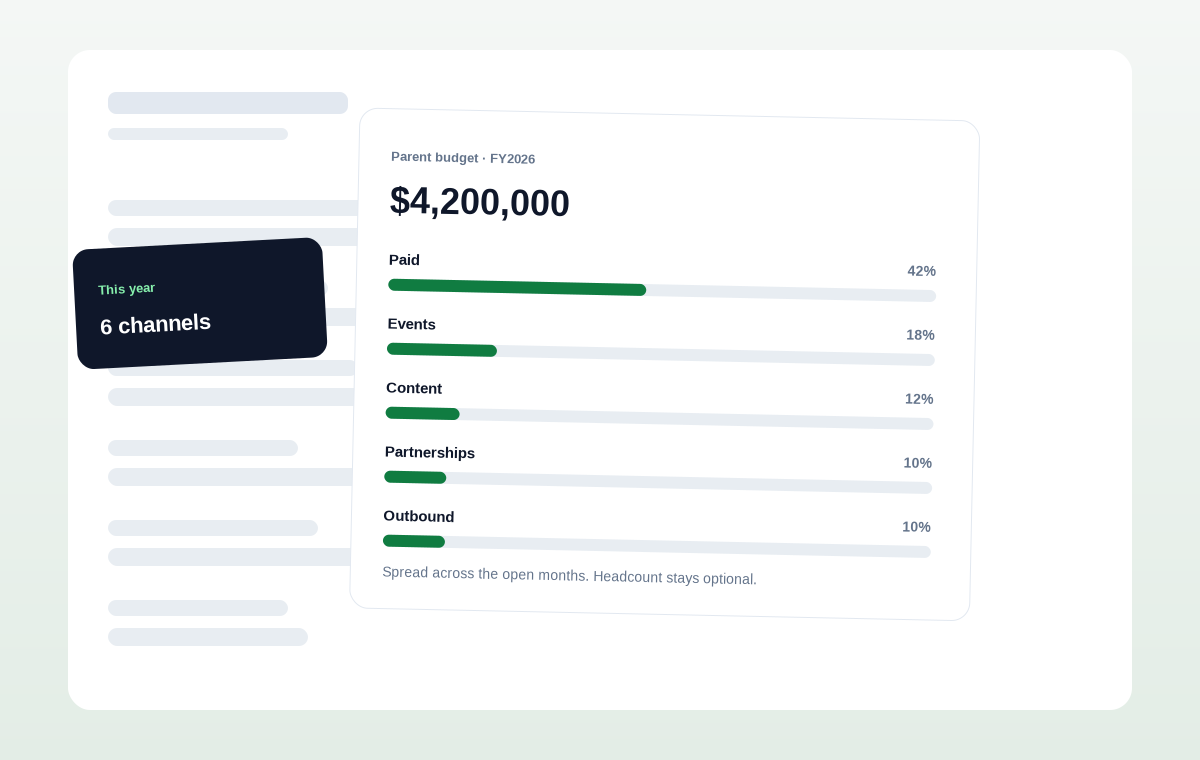
One record for every sales and marketing dollar
From a file or a live connector to the workbook finance takes away. Campaigns sit on their own days. Spent changes when a person approves a line or chooses which source counts.
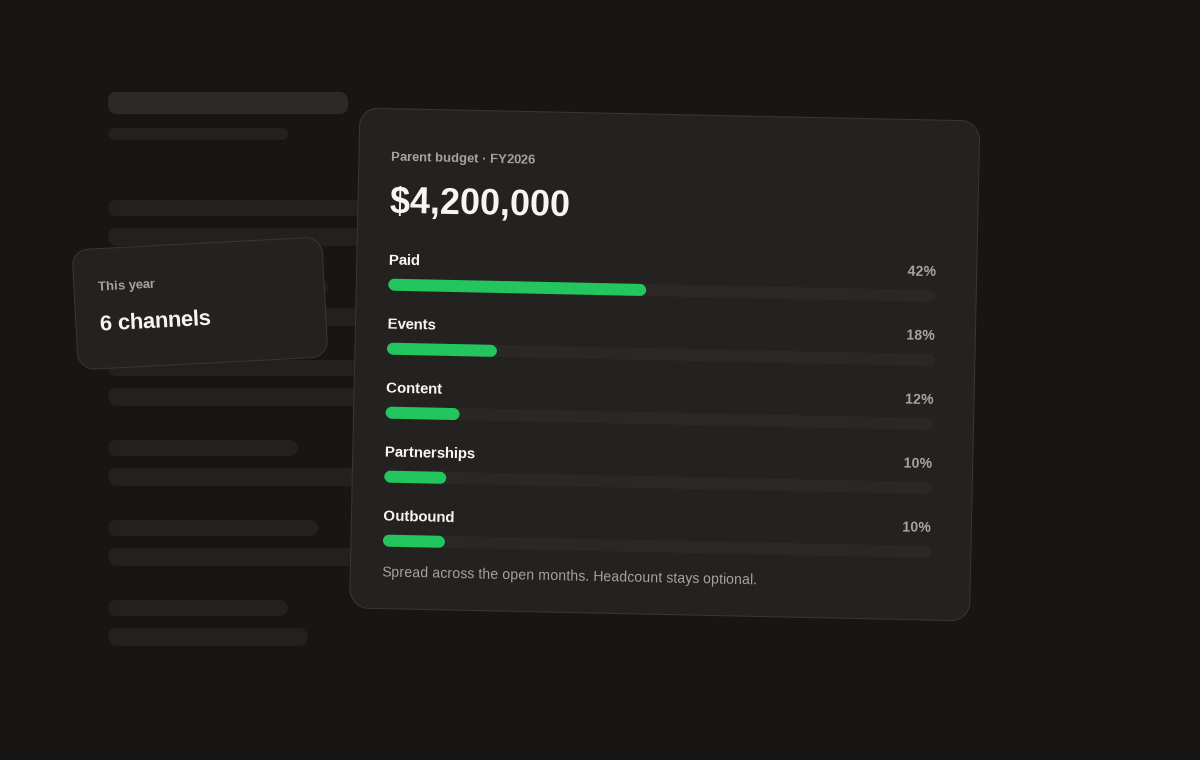
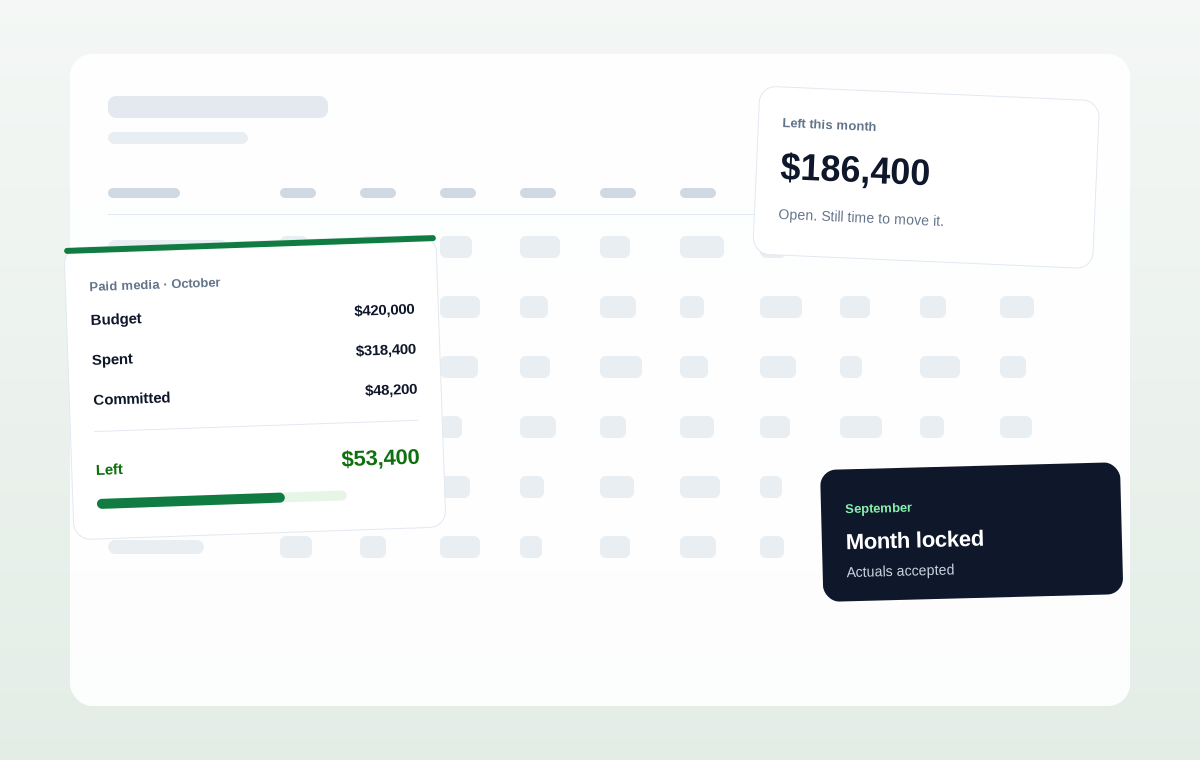
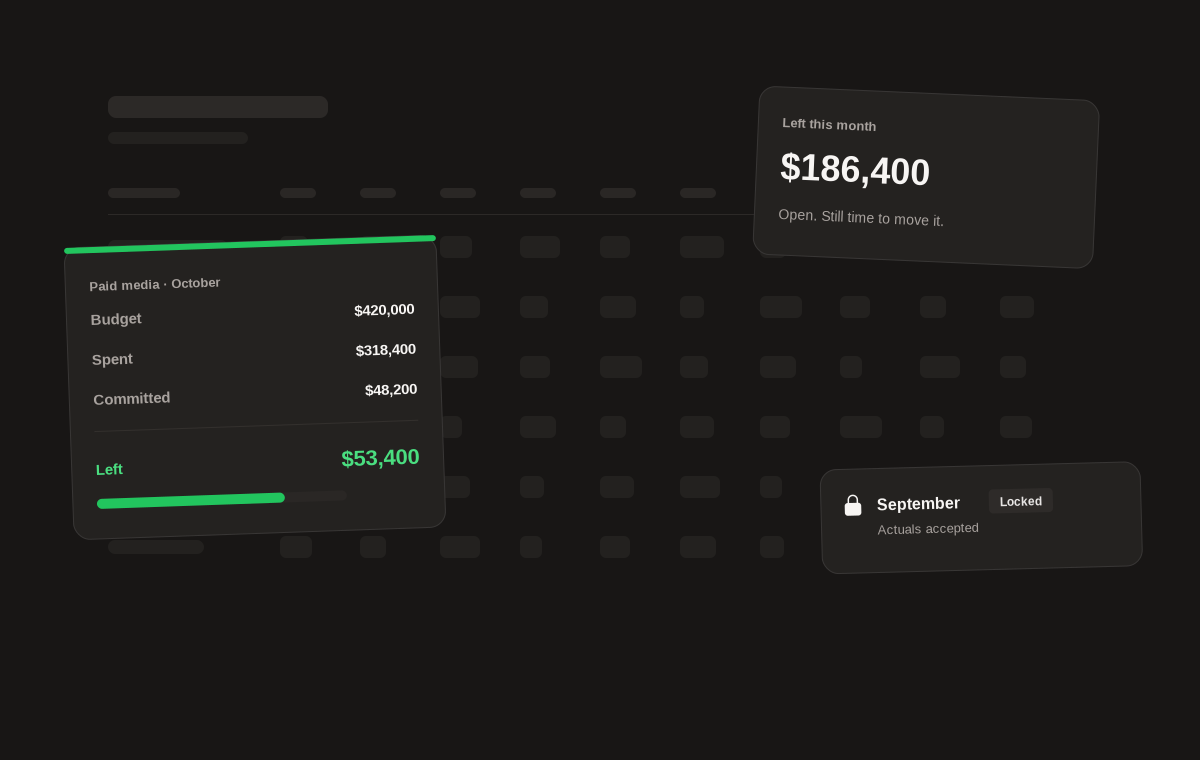
Budget, spent, committed, left
Approval reserves the months
A person chooses which source counts
Continuous sync across ad platforms, cards, and GL
Finmark
/
Product
Active
Continuous GL Sync
Zero Double-Counting
Four jobs
One record, four ways in
Capture the file, pace the open month, join the deal, and take the same numbers out.
The path
From the file to the month you can still change
Five moves. Each one leaves a line a person can open.
01
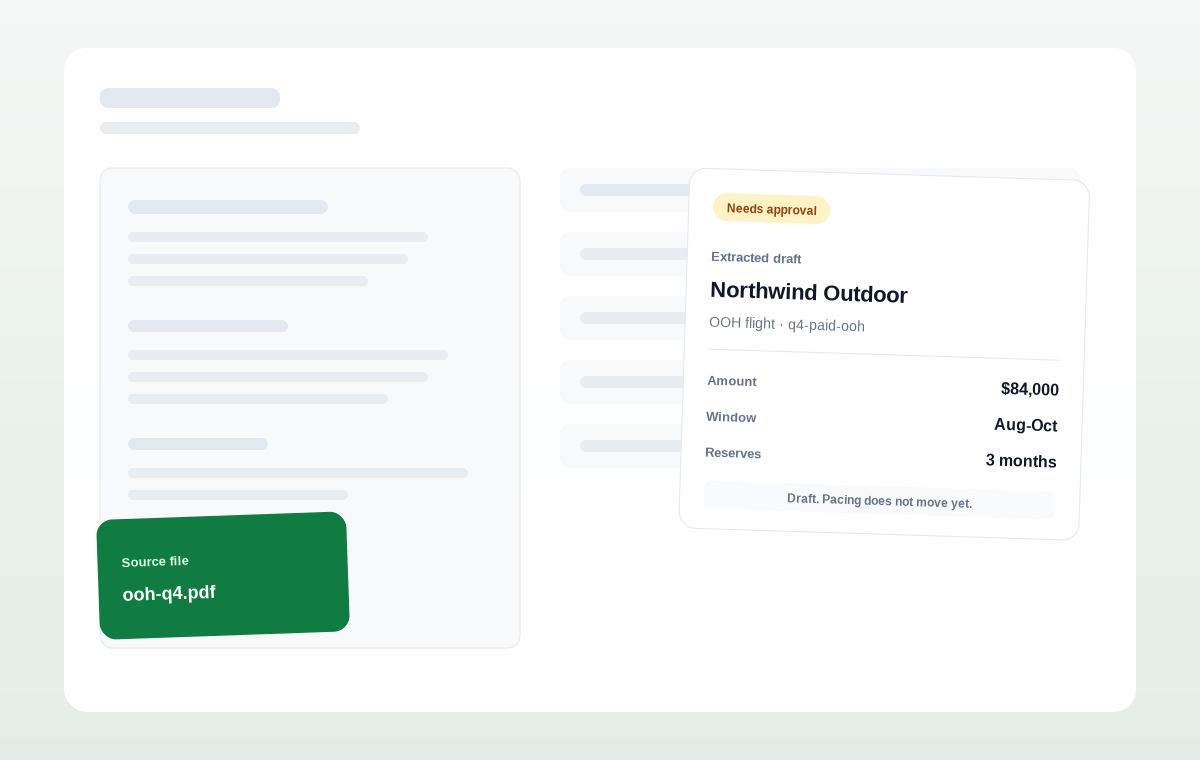
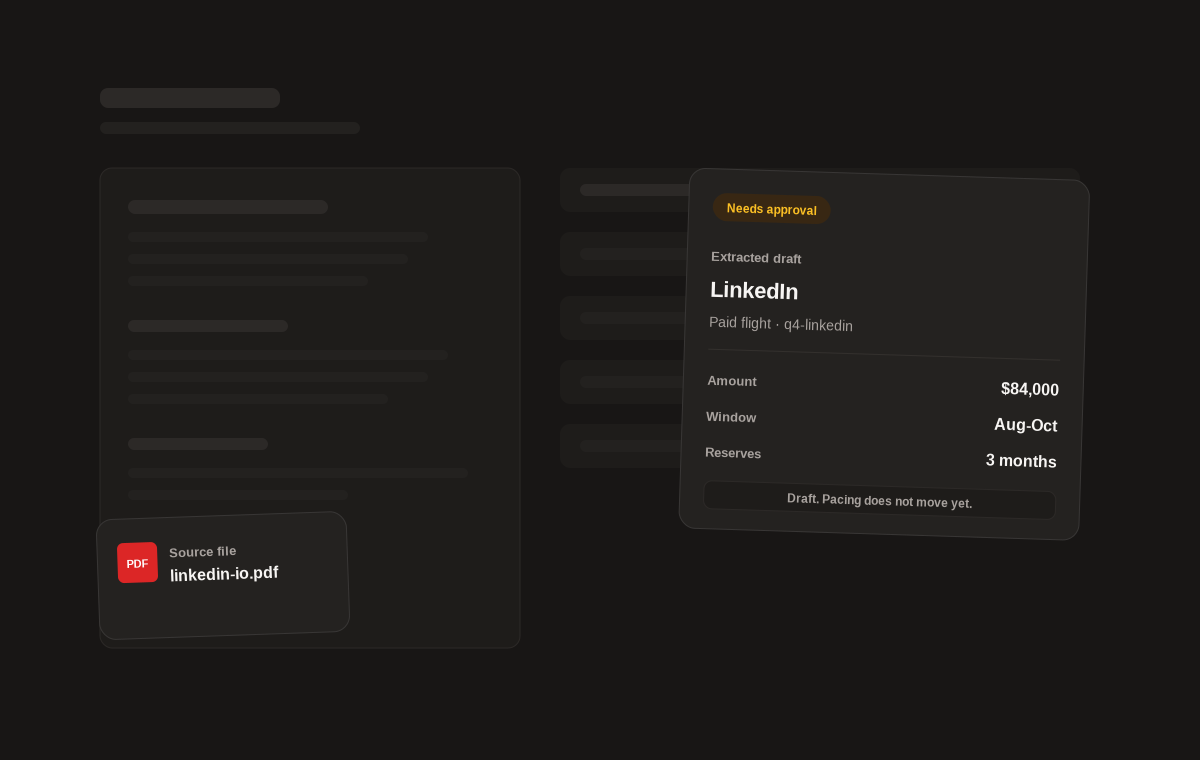
A file becomes a draft
Upload a contract or a spreadsheet. Finmark proposes the vendor, the amount, and the months the buy covers.
02
A person approves the line
A suggestion stays a suggestion. Approval is what reserves the budget.
03
The months show committed
The reservation sits on the months it covers, before the invoice arrives.
04
Spent replaces the reservation
When the bill or the card charge lands, that month's committed falls and spent rises. The same dollar is not counted twice.
05
Finance takes the same numbers
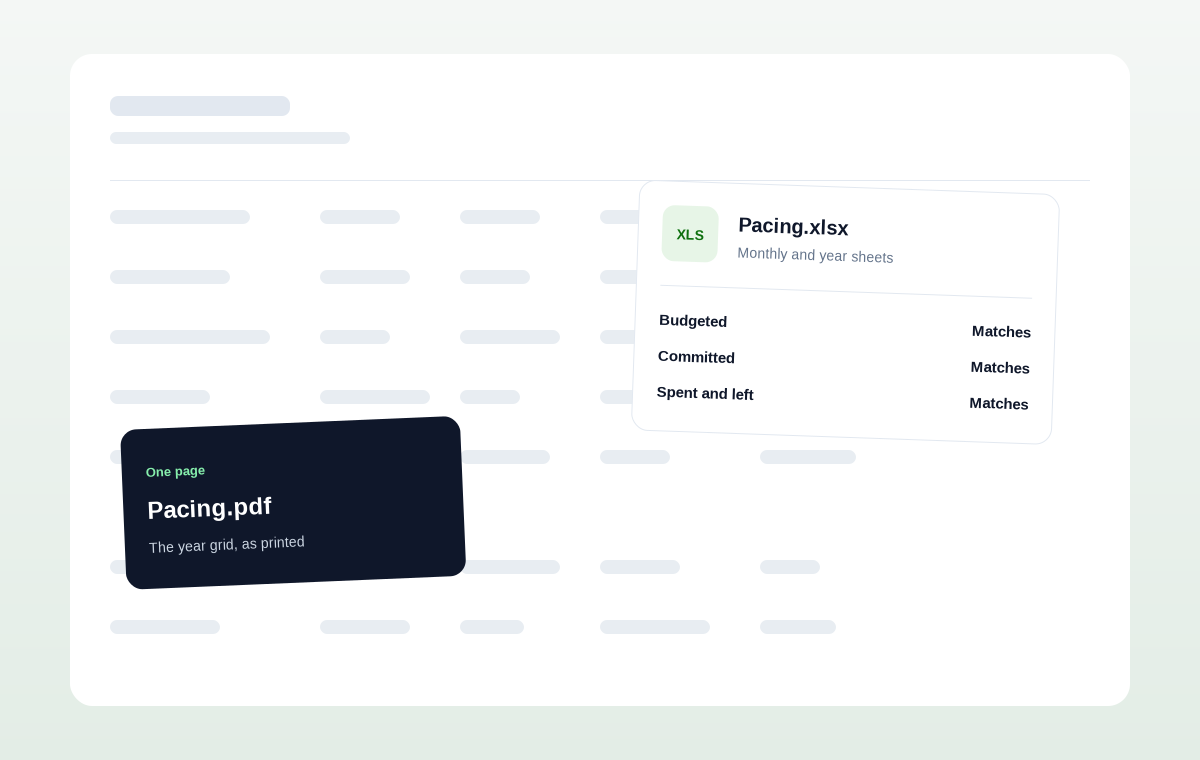
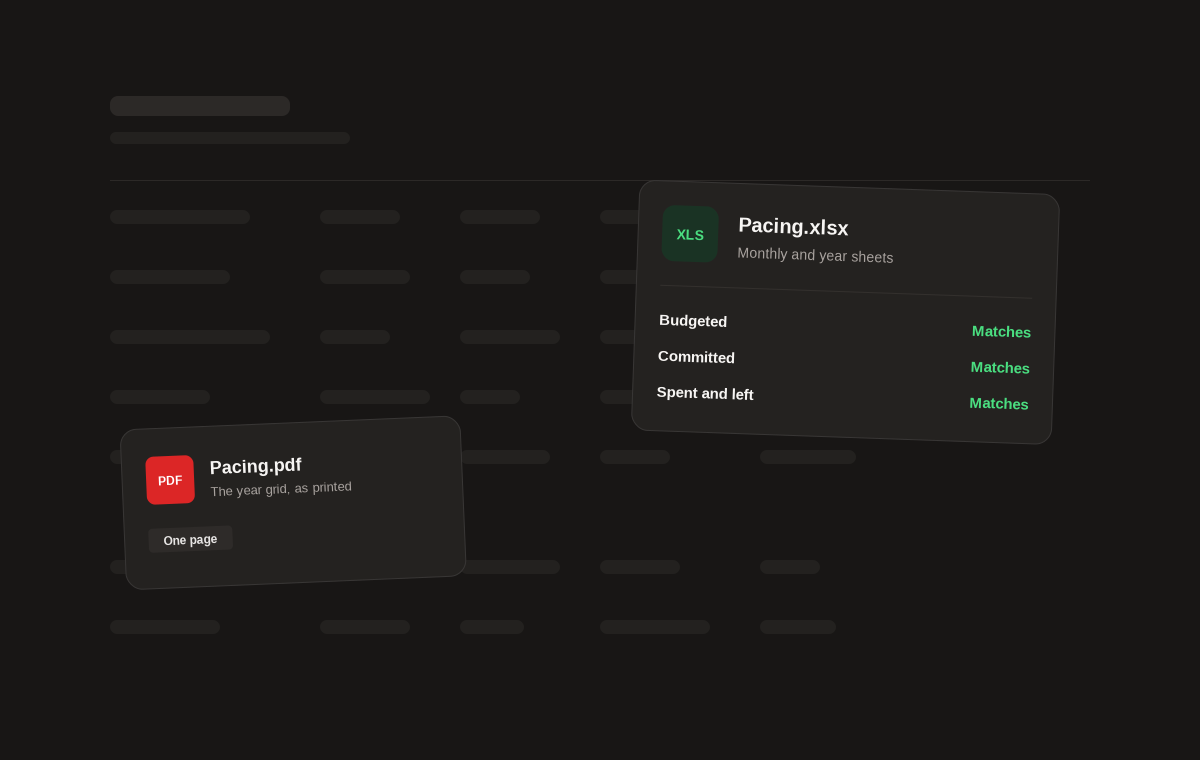
Excel and a one-page pacing PDF follow the filter on screen.
The record
Every source, one spent number
A contract, a bill, a card charge, and an ad platform can name the same vendor. Spent moves when a person approves a line, maps a campaign, or chooses which source counts.
Campaigns and events on their own days
A conference has a start and an end. A deposit paid in February still sits on that June event when the line carries its campaign. The schedule draws the bar. The tag decides the cost.
Contracts, bills, cards, and ads
A contract reserves the months it covers. A bill posts in one month. A card charge waits for a vendor and a channel. Ad spend posts under the campaign a person maps. An accrual posts when that month is released.
One cost, recorded twice
A Google invoice and the synced Google Ads spend for that month both count until a person keeps one of them in spent, or says they are separate costs.
Connect a source, or keep the file
HubSpot, Meta, Google Ads, LinkedIn, Ramp, and Brex can connect and sync on a schedule. Documents still arrive as a file you upload. ChatGPT or Claude can connect to the organization, and an API key's secret is shown once.
Allocation rules
A rule can retag a shared line when it posts. A software seat split or a contractor split stays a rule a person writes.
Team and roles
Members and invites. A role decides what that person can change, including what a connected assistant can change.
Deals you import
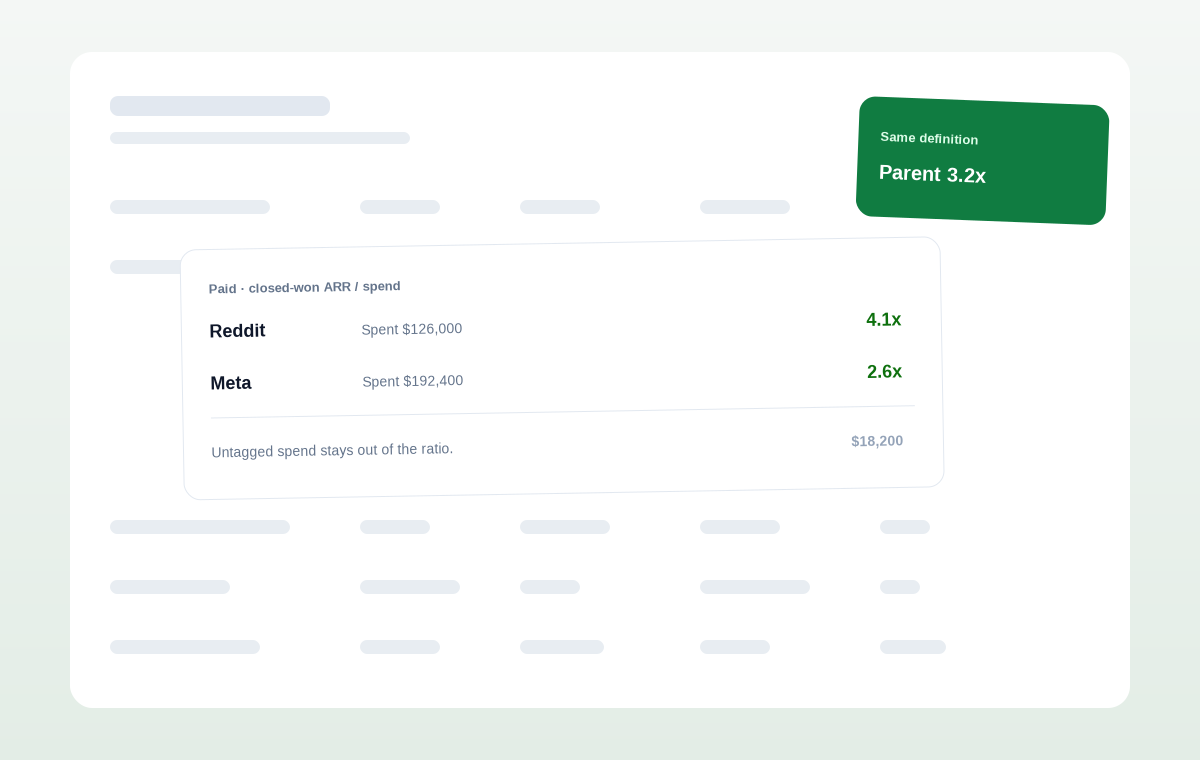
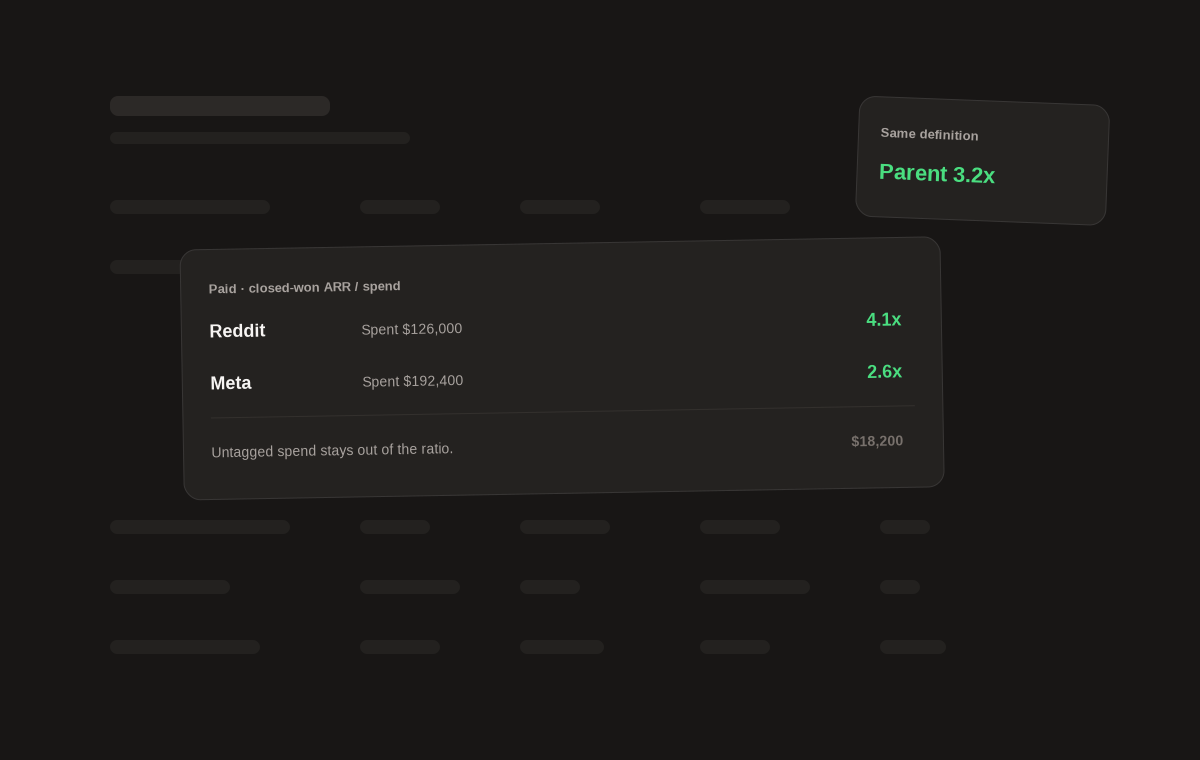
Return uses deals you import, under the definition the screen names. If none join the campaign, the ratio stays empty.
On every line
Tagged before it counts
Campaign, channel, vendor, program, and GL account stay on the transaction. A suggestion waits until a person approves it.
One campaign id
The same id can run from the contract to the line to the deal you import.
A person approves
An extracted amount or tag is a draft until someone accepts it. Drafts stay out of pacing.
A locked month stays
After a month is locked, its budget, commitments, and actuals stay as accepted. Open months stay editable.
Who it is for
The pair that has to agree
A marketing lead who needs the open month, and a controller who needs the close to match.
01
Channel sprawl
Paid media, events, agencies, and software. At least three cost shapes, and none of them look like the others.
02
A monthly close
The books close every month. Board reporting already exists. Marketing still has to decide inside the month.
03
A stack you already run
A CRM, card spend, and a general ledger. Finmark sits between them. It does not replace them.
The sheet
What the workbook was holding
The same questions, without rebuilding the file after close.
The spreadsheet
The record
The spreadsheet
Rebuilt by hand after the month closes.
The record
Updated when a person approves a line.
The spreadsheet
One cell for the whole event.
The record
The flight, the add-ons, and travel stay on their own lines.
The spreadsheet
A bill and an ad platform can both count.
The record
A person chooses which source counts.
The spreadsheet
Later months wait on the closed month.
The record
A lock freezes the closed month and leaves the rest editable.
One buy
August signs. October still moves.
A contract that covers three months should not wait for the last invoice.
August
The contract arrives
Northwind Outdoor, August through October. The file is the proof, and the draft sits beside it.
Approval
Three months are reserved
Each month carries its share. The invoice is still missing, and the screen says so.
October
The open month is still a decision
Budget, spent, committed, and left stay readable while you can still move October.
Close
August locks
A person locks when the actuals are accepted. September and October stay editable.
Questions
What the record will and will not do
Short answers, from the product as it works today.
No. Pacing moves after a person approves the line. Until then the months look unchanged.
Yes. Left can be negative. The page stays usable, and the overspend stays visible.
A person chooses which source counts. The overlap stays on screen until that choice is made.
Sample pushes download a file. They do not call those systems, and the screen does not pretend they did.
You import them. If none join a campaign, return stays empty. The screen does not invent a pipeline number.
Drafts stay drafts
The budget moves when a person approves.
Left, while the month is open
Budget, spent, committed, and what remains.
The file matches the screen
Excel and a one-page pacing PDF.