The marketing spend subledger
Real-time pacing & close
Pace the marketing budget in one place
See budget, spent, and what a contract, a card, or an ad platform already reserved, while the month is still open.
Continuous sync across ad platforms, cards, contracts, and general ledger
Finmark / Northwind Growth
/
October 2026 Pacing
Live subledger
Budget
$420,000
18 days open
Spent
$318,400
75.8% spent
Committed
$48,200
11.5% committed
Left to pace
$53,400
12.7% remaining
Spent: 75.8% spent
Committed: 11.5% committed
Left to pace: 12.7% remaining
Source & Campaign
Instrument
Amount
Pacing status
Meta Ads
Direct API sync : Daily spend pacing
$94,200
Google Ads
Search & Performance Max : Daily pacing
$112,400
LinkedIn Media IO
Flight contract : Q4 launch (Aug-Oct)
$48,200
Stripe Corporate Card
Growth team SaaS & creative tools
$18,600
Wired Agency MSA
Creative production : Milestone 2
$12,000
Paid media, October
5 / 5 instruments synced
The lag
The month moves before the spreadsheet does
PDFs, platforms, and a sheet
Contracts arrive as files. Media arrives as charges. The close still lives in a workbook someone rebuilds by hand.
The contract spends first
A buy signed in August can consume August, September, and October before an invoice exists.
The close is late for pacing
Marketing decides inside the month. A report after close describes a decision that already passed.
The open month
Four things the month has to hold
A file, a reservation, a return, and a lock. Same record.
01
The file
A contract or a spreadsheet becomes a draft beside the proof. Nothing is reserved yet.
02
The reservation
Approval puts the amount on the months it covers, before the invoice and before cash.
03
The return
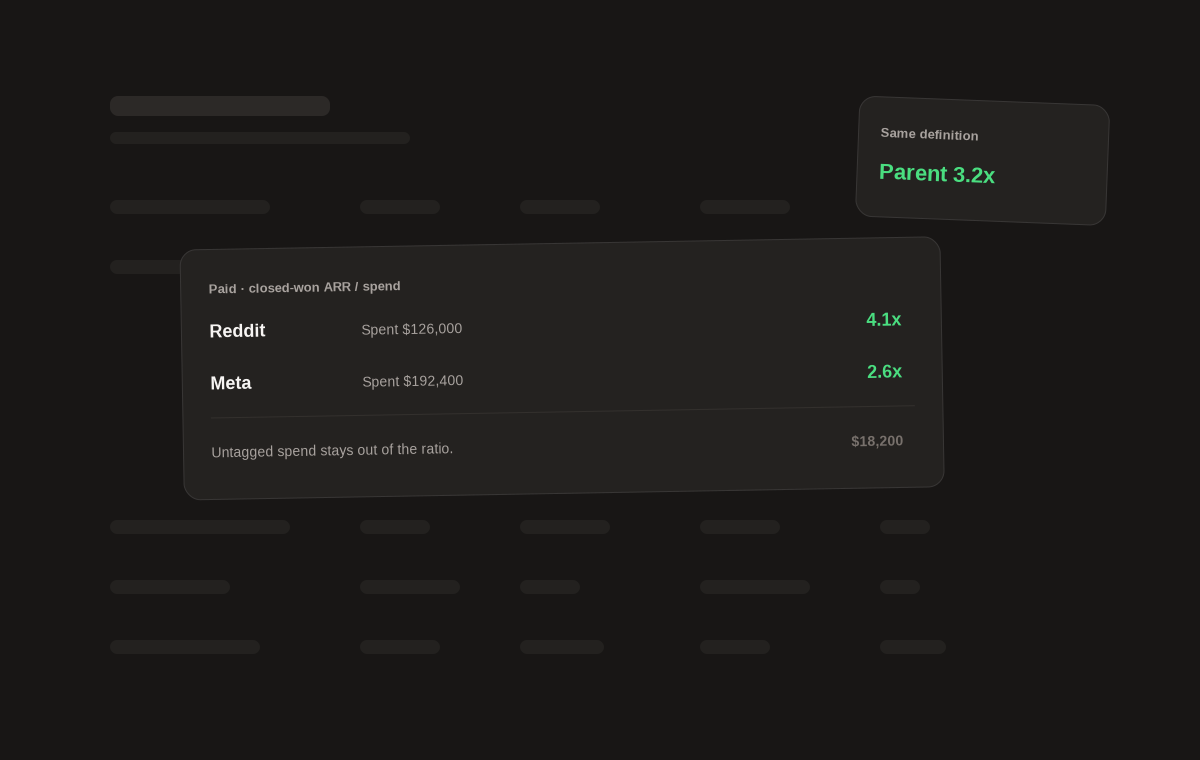
Deals you import sit beside spent, under a definition the screen names.
04
The lock
A closed month stays put. The months still ahead stay editable.
Capture
The file becomes a draft, then a reservation
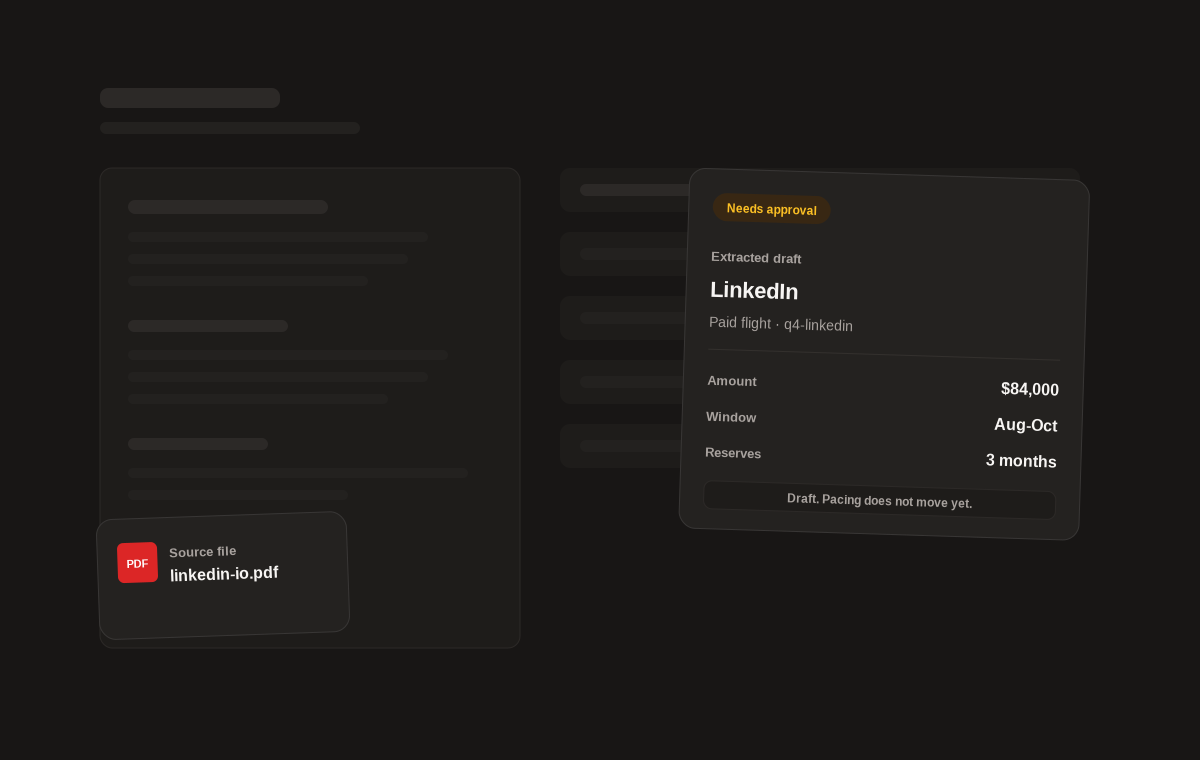
Upload a contract or a spreadsheet. Finmark proposes the vendor, the amount, and the months. A person approves it before pacing moves.
See capture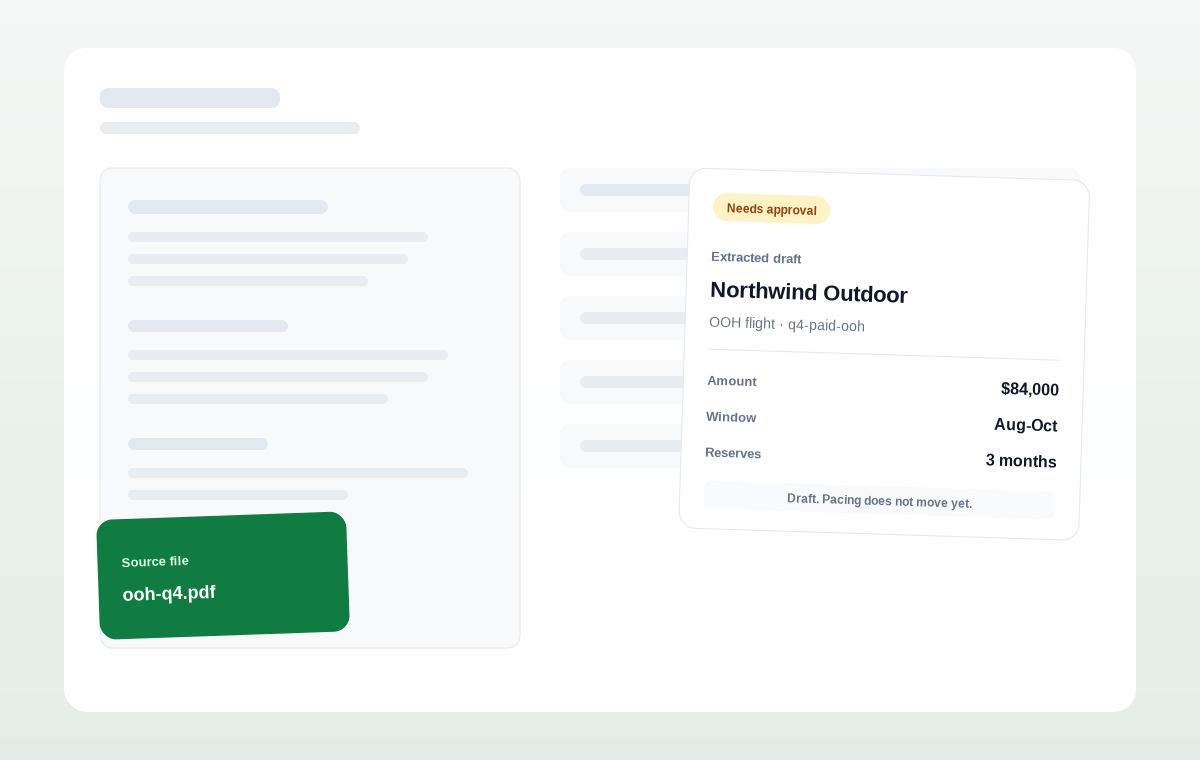
Pacing
Left, while you can still move it
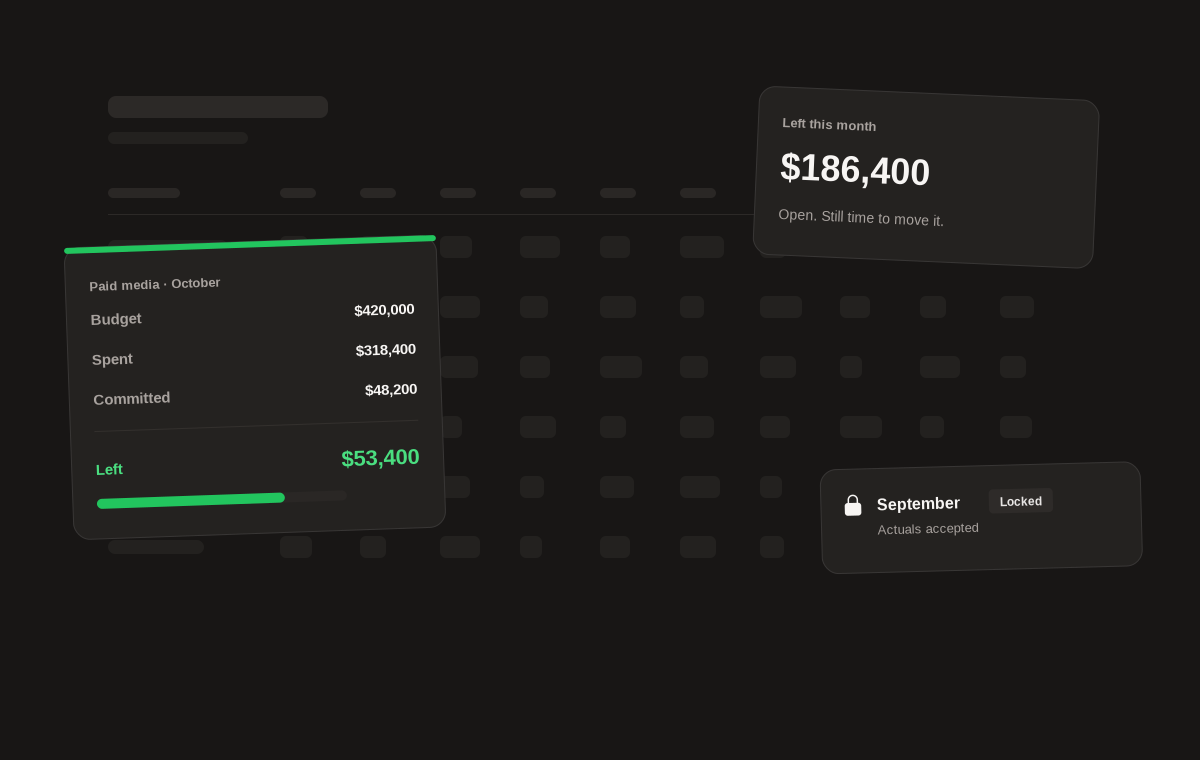
Each channel and month shows budget, spent, committed, and left. A locked month stays put. Later months stay editable.
See pacing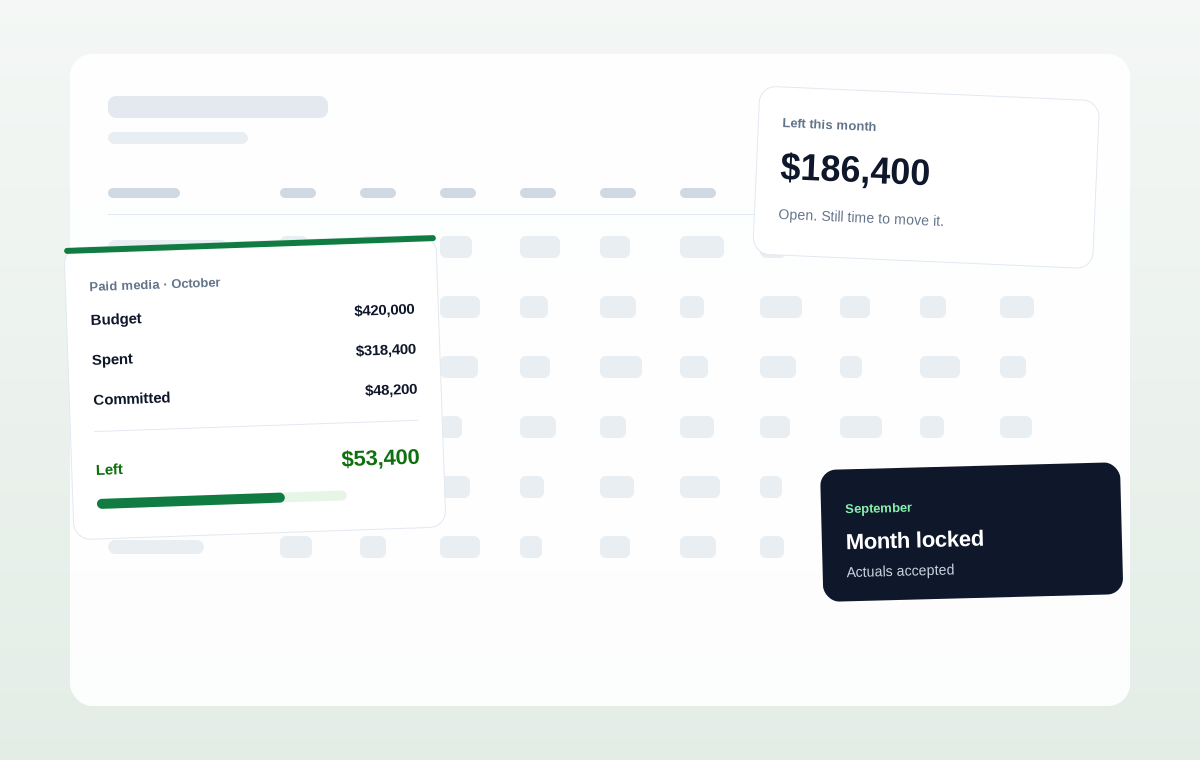
Performance
The campaign sits on the spend and on the deal
Drill from the parent budget to a channel to a campaign. Return uses deals you import, under one definition the screen names.
See performance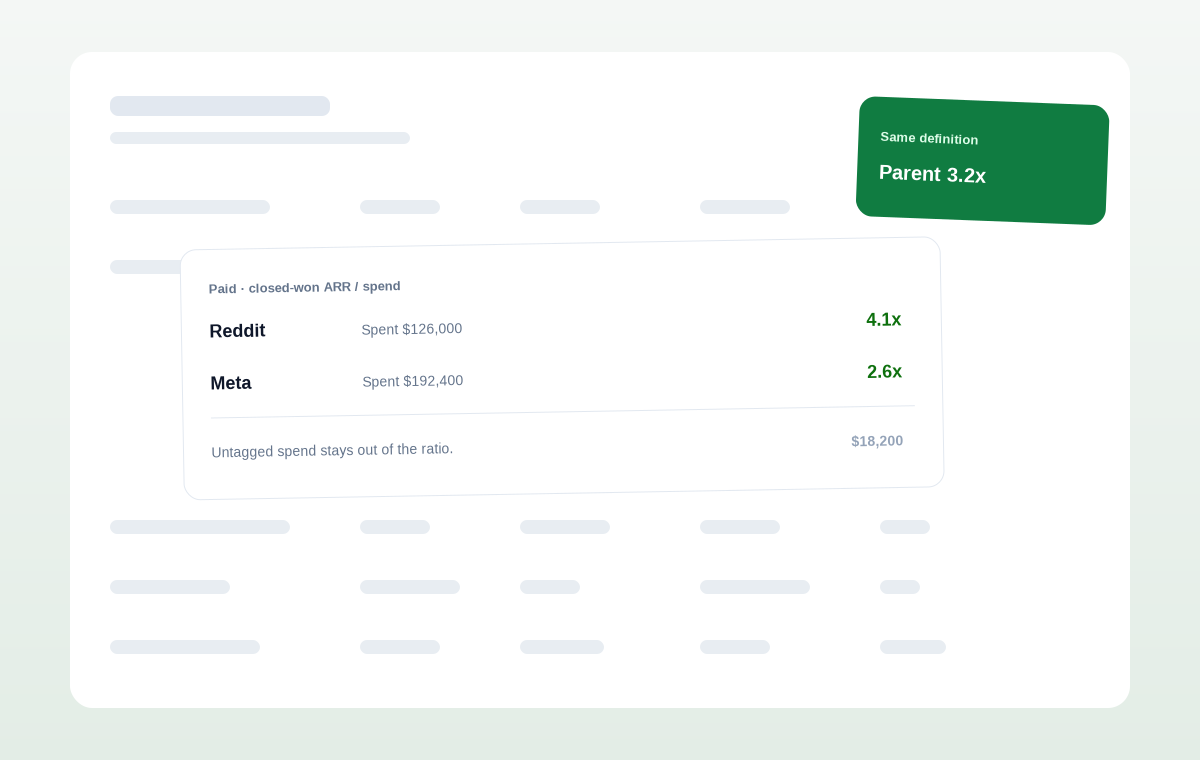
Exports
The workbook matches the screen
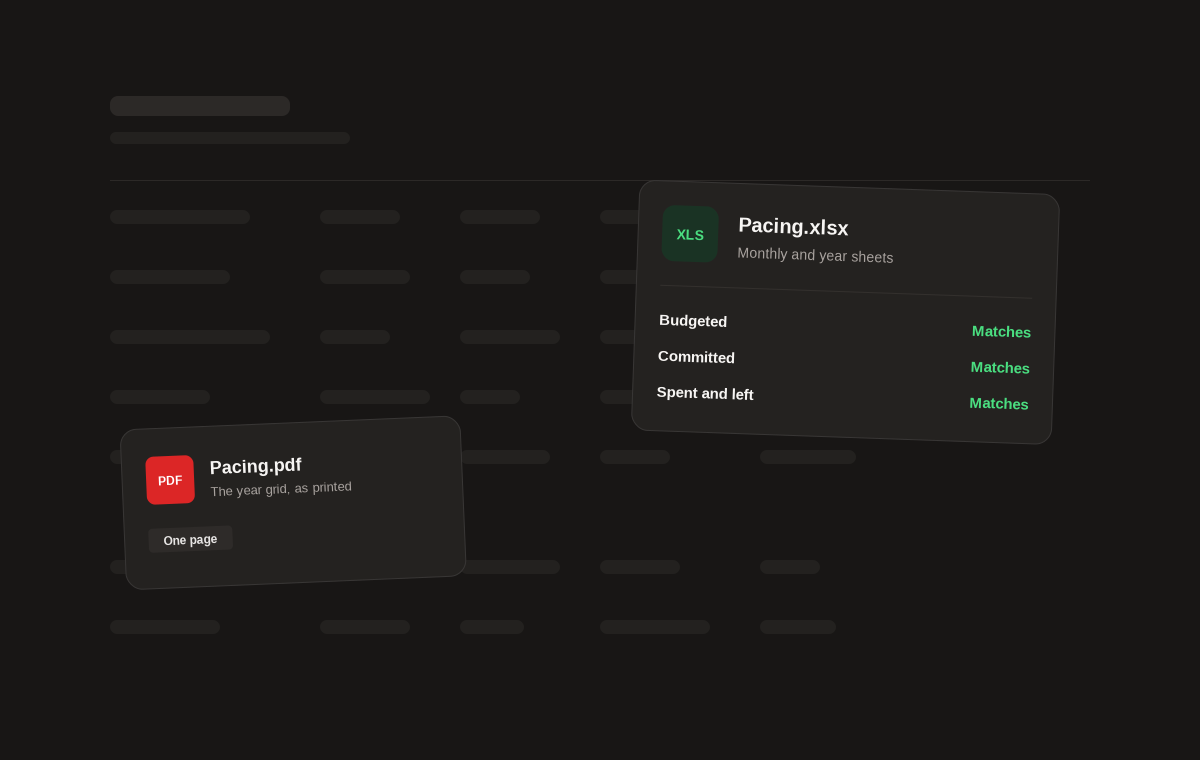
Take budget, committed, spent, and left into Excel, or print a one-page pacing PDF. The file is the handoff.
See exports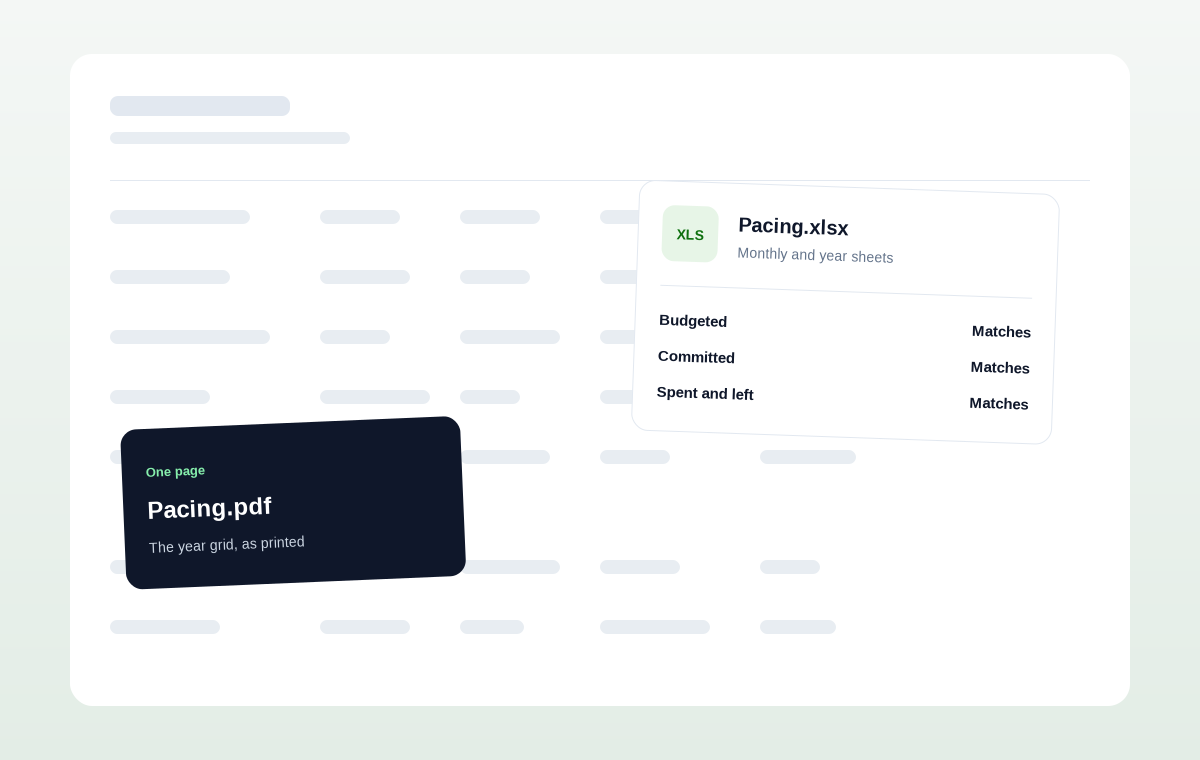
The record
Every source, one spent number
A contract, a bill, a card charge, and an ad platform can name the same vendor. Spent moves when a person approves a line, maps a campaign, or chooses which source counts.
Campaigns and events on their own days
A conference has a start and an end. A deposit paid in February still sits on that June event when the line carries its campaign. The schedule draws the bar. The tag decides the cost.
Contracts, bills, cards, and ads
A contract reserves the months it covers. A bill posts in one month. A card charge waits for a vendor and a channel. Ad spend posts under the campaign a person maps. An accrual posts when that month is released.
One cost, recorded twice
A Google invoice and the synced Google Ads spend for that month both count until a person keeps one of them in spent, or says they are separate costs.
Connect a source, or keep the file
HubSpot, Meta, Google Ads, LinkedIn, Ramp, and Brex can connect and sync on a schedule. Documents still arrive as a file you upload. ChatGPT or Claude can connect to the organization, and an API key's secret is shown once.
Allocation rules
A rule can retag a shared line when it posts. A software seat split or a contractor split stays a rule a person writes.
Team and roles
Members and invites. A role decides what that person can change, including what a connected assistant can change.
Deals you import
Return uses deals you import, under the definition the screen names. If none join the campaign, the ratio stays empty.
On every line
Tagged before it counts
Campaign, channel, vendor, program, and GL account stay on the transaction. A suggestion waits until a person approves it.
One campaign id
The same id can run from the contract to the line to the deal you import.
A person approves
An extracted amount or tag is a draft until someone accepts it. Drafts stay out of pacing.
A locked month stays
After a month is locked, its budget, commitments, and actuals stay as accepted. Open months stay editable.
Who buys it
Marketing and finance, on the same numbers
For the CMO
Set the parent budget, see what is left this month, and decide where the next dollar goes.
CMOs get finance out of their hair and pull levers with confidence.
For the CFO
Trust budget versus spent, see that a contract was tagged before it counts, and export the same numbers.
CFOs can trust marketing is not lighting money on fire.
Questions
Before you open the month
What Finmark is, who it is for, and what it refuses to invent.
The system of record for every sales and marketing dollar. Capture, pacing, the deal beside the spend, and the file finance takes away.
A marketing lead who has to pace the open month, and a controller who has to trust the close.
After a person approves. A draft, including one suggested by the read of a file, does not move it.
The overlap stays visible. A person chooses which source counts, so a bill and an ad platform do not both add the dollar.
Excel for budget, committed, spent, and left, and a one-page pacing PDF. Both follow the filter on screen.
Drafts stay drafts
The budget moves when a person approves.
Left, while the month is open
Budget, spent, committed, and what remains.
The file matches the screen
Excel and a one-page pacing PDF.